
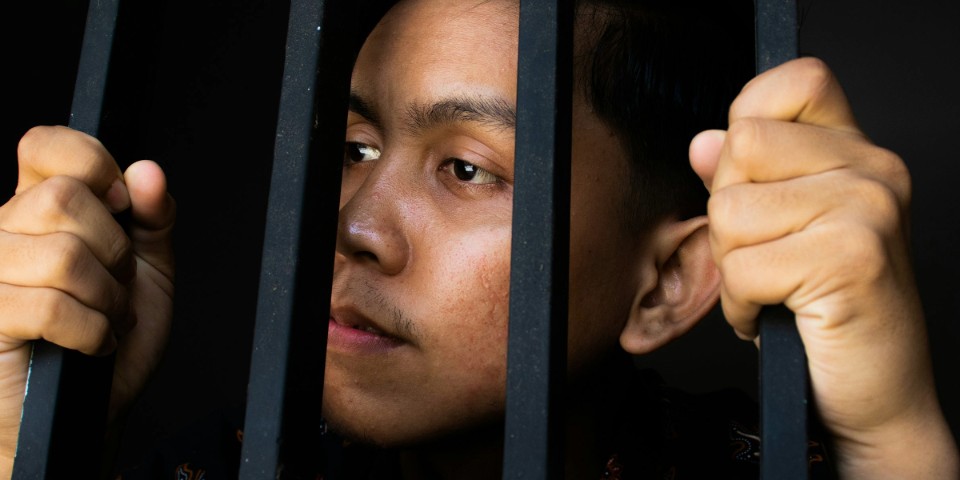
A Second Chance
Posted on 31 Aug 2025 by Sheela Iyer
Sheetal was an extroverted and ambitious girl. She loved travelling solo to new places and exploring different cultures and experiences. She never hesitated to try adventurous activities or embrace thrilling challenges. With her parents' unwavering support, she enjoyed every moment of life.
Of all her travel destinations, Sheetal cherished Switzerland for its picturesque scenery. Her travel blog reached nearly fifty-six lakh followers from across the world. A foodie, she shared tastes of local cuisines and culinary delights from every place she visited. Her followers eagerly awaited her posts.
Although Sheetal couldn’t reply to every comment on her post—which was understandable—one in particular caught her attention on her recent post: “I think your backpack is secretly plotting to take over the world—are you aware of this? (smiley emoji) I closely follow you and love your energy and posts, especially the ones about food, since I’m a foodie too!”
“I liked your sense of humour,” Sheetal replied with a heart emoji and tagged Manish.
Within minutes, Manish responded, “Thank God you replied. What work do you do other than travelling?”
“Travelling is my job,” Sheetal answered.
Over time, the random exchange of messages on her blog slowly evolved into WhatsApp conversations and calls.
As days turned into months, their bond grew stronger, and they began dating. On Sheetal’s birthday, Manish proposed marriage by gently slipping a diamond ring onto her finger. Sheetal’s happiness knew no bounds. Like every year, her parents arranged a grand party, inviting relatives and Sheeta’s friends.
In the evening, Manish joined the celebration. Music, dance, games, and gifts, everything had been meticulously arranged.
“Is this your birthday party or wedding? So grand!” Manish softly muttered.
“Yes, my parents celebrate my birthday in a grand way every year. Once we get married, you’ll have to take over,” Sheetal said with a smile.
“Oh no, that’s too much for me,” Manish instantly replied.
“Chill, my love. You don’t have to do so much,” Sheetal replied with a playful blink, and they both laughed.
One by one, all the guests left, except Manish, who stayed back at Sheetal’s request because she wanted to introduce him to her parents.
“Mom, Dad, this is Manish, a software engineer and a Punjabi. We met on social media and have been dating for a while now. We wish to marry. His parents have already agreed to our relationship,” Sheetal confessed with a mix of nervousness and excitement.
After a brief silence, her father turned to Manish and said with a smile, “Hello, young man. So, you are my daughter’s choice.”
Manish grinned and glanced at Sheetal. Sheetal’s mother warmly added, “We would like to meet your parents to discuss this further. After all, if you both are happy, that’s what matters the most.”
“Yes, sure, Aunty. My parents stay in Punjab. They are planning to come next week.” Manish responded.
“So you are living on rent here in Mumbai?” No plans of buying your own house?” Sheetal’s father questioned.
“Yes, Uncle. I live on rent and currently have no plans to own a house because I am looking out for opportunities abroad.” Manish answered.
“Oh, is it?” Sheetal’s father sounded a bit upset.
“Sheetal, I will take your leave now. See you soon. Bye, Uncle and Aunty,” Manish said, before walking toward the main door.
Sheetal’s father was not a face reader, but he had the instinct to sense people well. Somehow, he felt that Manish was not a great match for his daughter; there was something about his demeanour that didn’t sit well with him. Hence, he spoke openly to Sheetal about his doubts, but she had already made up her mind and wasn’t willing to reconsider.
Sheetal’s father agreed to meet his parents for Sheetal’s sake and happiness.
The following week, Manish’s parents visited Sheetal’s home for lunch. They were greeted with a heartfelt welcome—flowers, smiles, and the aroma of fresh food filling the air. Sheetal respectfully bowed, touching their feet for blessings, while her parents guided them to their seats. Since they were Maharashtrians, their usual cuisine differed from the Punjabi style; however, the table was laid with a colourful spread of dishes, including chole bhature, dal makhani, and lassi, which blended the flavours of both cultures.
After lunch, while Manish and Sheetal went for a stroll in the garden, their parents exchanged conversations on various topics—family, traditions, and everyday life. Four hours flew by.
“Acha ji, aap pandit ji se muhurat nikal kar humein ittila kar dena. Sagai aur shadi dono saath ho jaye to acha hai,” Manish’s father said, getting up to leave.
Sheetal’s mother handed a box of sweets to Manish’s parents, and the family escorted them all the way to the car.
“Dad, do you still feel the same about Manish the way you felt the first time?” Sheetal asked.
“Hmmm… look, beta, I’m not against this wedding, but something still doesn’t feel right, though his parents seem very good. “But again, it’s your choice, and if you truly feel this is best for you, I am with you,” her father replied.
Sheetal thanked and hugged him tight.
**************
The dates for the D-day were finally decided. Every detail of the pre-wedding celebrations—Mehndi, Haldi, and dance programs—had been meticulously planned, with halls and catering already secured, leaving everyone buzzing with excitement.
On D-day, Sheetal looked radiant, like an angel descended straight from heaven. Her fair skin glowed like a diamond. The kohl in her chocolate-brown eyes was applied in a single, perfect stroke. Her lips were adorned with soft pink lipstick, and her waist-length hair was intricately braided, decorated with delicate flowers that added a touch of elegance. All eyes were on her.
The entrance was decorated with lilies and orchids, setting a beautiful tone for the celebrations. The lavish food spread left everyone delighted and thoroughly impressed. The pre-wedding and wedding ceremonies went off flawlessly, earning praise from all the guests.
With the wedding festivities behind her and travel off the cards for now, Sheetal turned her attention to a long-held passion. She decided to start her own boutique, for she had an eye and a deep love for fashion. Her business gained popularity, and she did extremely well.
Initially, Manish showered Sheetal with praise, but as her popularity grew, his attitude began to shift. The admiration turned into subtle taunts. He started to feel jealous of her success.
“At social gatherings, when Sheetal mingled freely with people, Manish’s smile would vanish. This often led to arguments, and sometimes even abuse behind closed doors.”
Manish was wearing layers of masks that gradually started to unveil, and at one point, the unsettling thought crept into Sheetal’s mind, “had she made a mistake in marrying him?”
She brushed the thought off, thinking it was a temporary phase, but guess what - she was wrong.
Within six months, she had to close her boutique, as Manish had received a lucrative offer from one of the conglomerates in Dubai. It did bring tears to her eyes to close her established business.
“It’s ok. Perhaps greater opportunities are waiting in Dubai. Manish cannot let go of this wonderful offer,” she consoled her heart and convinced her mind.
Soon, they wrapped up everything, bid goodbye to their loved ones, and moved to Dubai, the city of Gold.
Things went smoothly… or at least, that’s what she believed, with Manish excelling at his new workplace and Sheetal keeping herself busy—managing the household and teaching her students intricate clothing designs.
Soon, good news followed. Sheetal was expecting their first child. This news seemed to bring back the compassion in Manish. He spent as much time with Sheetal as possible, accompanied her to the hospital for check-ups, made sure she ate on time, and went out of his way to keep her comfortable. His tone was kinder, and his eyes carried the same warmth that had once made Sheetal fall in love with him. Both sets of parents were overjoyed, and it wouldn’t be wrong to say they were on cloud nine.
Months flew by in anticipation, and finally, the delivery date arrived. Sheetal endured almost ten hours of unbearable labour pain before the doctors advised a caesarean section. Though hesitant, she had no choice. She was rushed into the operating theatre, her heart pounding with both fear and excitement. After what felt like an eternity, the cry of a newborn echoed through the hospital corridors. Sheetal had delivered a baby boy. The moment she held him in her arms, all her pain melted away, replaced by an overwhelming wave of love and joy.
The first six months went well, with Manish taking good care of mother and son. But gradually, he started showing off his true colours again, yelling at Sheetal over trivial matters, coming home late, and drinking more often. Then one night, he crossed all limits. He walked in with another woman, hand in hand. Sheetal felt her world shatter instantly. She took a deep breath, gathering whatever courage she could muster, and said firmly, ‘Leave immediately. This is my house, and I am his wife.’ Manish’s face turned red with rage, and he slapped her hard. Pain and shock raced through her, making her legs tremble, but she refused to back down. From that day, abuse and fights became a part of her daily life.
Black circles under her eyes, swollen eyes, and slap marks on her face made Sheetal look tired and defeated. She tried to hide them from her parents, especially her father, since he was the one who had warned Sheetal against marrying Manish. But one day, when her father made a video call, she instantly answered without realizing that her parents would find out the truth.
“Sheetal, what are those marks on your cheeks? Why are your eyes swollen like you have been crying for days?” Her father firmly asked.
Sheetal panicked and quickly put on her glasses to hide her swollen eyes, but she couldn’t hide her pain. The pain reflected in her voice. It spilt out in the form of tears, staining her face.
The strain was clear in her father’s voice. He swallowed the lump in his throat and said, “Beta, what happened? Tell me the truth. We have the right to know.”
Sheetal removed her glasses, wiped away her tears, and, taking a long breath, shared the ordeal with him. “Oh, Dad, you were right about Manish. Wish I had seen what you saw.” She managed to whisper. On hearing this, her mother, who was sitting beside him, couldn’t control her tears.
“Sheetal, you are not going to stay there anymore. Come home taking the next available flight. I will book the flight tickets. We are still alive and capable of taking care of you and Aarush. I don’t want Aarush to follow his father’s footsteps. Aarush must grow up seeing love, not scars.” Her father said, strictly.
“Dad, I know you and Mom are worried and concerned, but I can’t come. Aarush needs his father, too. I will take care of myself.” Sheetal pleaded.
Hmmm… Sheetal, you’re digging your own grave. I still can’t believe someone as strong as you would surrender to a life like this.” Her father said, his voice firm and disappointed.
Months passed! Some days were calm, gentle like still waters, while some days were like the waves crashing on the shores. Sheetal managed to steer the ship of her life.
Meanwhile, Aarush was growing fast. Whenever Sheetal’s parents expressed their wish to visit, she refused, fearing their arrival would only spark conflicts between Manish and them.
A few years later
Sheetal’s father died of a heart attack. That’s the time she and Manish visited Mumbai, and then again after a year, when she lost her mother to pneumonia. As Sheetal was the only child, her father prepared a will, leaving the flat in Aarush’s name and the remaining savings in hers.
Things began to deteriorate after their return to Dubai. Manish grew increasingly violent over trivial matters, and now, he had started hitting Aarush as well. Every night, Sheetal would look up to the stars in search of her parents and end up in tears.
As if things weren’t bad enough, Manish got transferred again, and they moved from Dubai to India, settling in Hyderabad—adding even more chaos to Aarush’s life.
After nearly a decade in Dubai, Aarush struggled to adjust to this new city, even after months. An introvert, he had made only a few friends in Dubai with great effort, and here he had none. The frustration, loneliness, and constant arguments with his father took a toll on Sheetal as well. His studies suffered— the boy who once passed with distinction now barely managed to clear his exams.
One evening, Aarush was watching a movie with the volume turned up a little too loud. Manish stormed out of his room and snapped at him to lower it. However, Aarush ignored him and continued watching. Enraged, Manish slapped him hard. That single act shattered Aarush’s patience, fueling his bottled-up anger and pushing the teen over the edge, erupting into an explosive fight.
On hearing the loud commotion, the neighbours gathered outside their house. Sheetal rushed in, trying desperately to make peace, but the fight had spiraled beyond control. Aarush, consumed by rage, grabbed a flower vase and hit Manish on the head.
Manish collapsed to the ground. Blood started to ooze out, turning the cream floor into a crimson pool. Sheetal screamed, shoving Aarush, who stumbled and fell to the ground.
One of the neighbours quickly dialled 100 and informed the police about the incident, and a few other people rushed inside the house and took Manish to the hospital.
“What have you done, Aarush? How could you?” Sheetal clutched his shoulder, her voice shaking.
Aarush did not move an inch. Sheetal rushed to go to the hospital, but stopped in her tracks at the threshold – the cops were already there.
They cordoned off the scene and clamped handcuffs on Aarush’s wrists. Sheetal pleaded with the police, insisting it was an accident, and desperately tried to save him, but the neighbours intervened and ensured he was sent to a juvenile detention centre. One of them said, “Arey aise ladke ko sharif logon ke saath rehne ka hakh nahi hai.”
On hearing that, Sheetal’s face turned red and she yelled at him, “What do you know about my son to utter such things?”
Instead of going to the hospital, Sheetal rushed to the police station. Aarush was sitting with a senior inspector who was interrogating him. She pushed the door open and stepped inside.
“Sir, it’s not his fault.. please….” Before Sheetal could finish, the inspector cut her off and ordered her to wait outside. “Your husband is declared dead on arrival. This is not an accident but a cold-blooded murder.” The inspector said sharply.”
On hearing this, shock and fear gripped her. Her hands trembled as she clutched the edge of her saree pallu, tears spilling uncontrollably. She folded her hands and pleaded once more, but in vain. The inspector turned away, his boots echoing against the hard floor, leaving her words hanging in the air.
Sheetal collapsed onto a wooden bench. Slapping her palm against her forehead, she muttered through sobs, “Is Aarush really going to jail? Have I failed as a mother? His future will be ruined… God, have mercy on my child. You know we’ve already endured enough ordeal, enough pain….”
The inner voice responded, “There is no point in wasting your time crying. Call your uncle for help.”
Wiping the tears with the edge of her sari pallu, she gathered herself. She pulled her phone from the sling bag and dialled her uncle’s number, who was a well-known, established lawyer.
“Sheetal… so good to hear your voice. How did you remember me today?” Her uncle’s tone carried warmth and surprise.
At the other end of the line, Sheetal’s lips quivered. Her throat choked, words stuck like a lump, refusing to go down no matter how hard she tried to swallow them, and a muffled cry escaped.
A pause. Then his voice softened, with concern, “What happened, dear? Why are you crying?”
Sheetal wiped her wet cheeks with the back of her hand, but the tears continued to flow. Gathering strength, she stammered and finally narrated the incident in fragments, her voice breaking at every sentence.
Silence hung for a moment, and then her uncle exhaled and said, “Oh, that’s terrible news… Don’t worry, I’m leaving immediately.” She could almost hear the rustle of his keys and the hurried shuffle of footsteps in the background.
“It will take me thirty minutes at the most. Stay there, beta.” He said quickly, pulling the door shut behind him.
Sheetal clutched the phone tighter. Her Uncle’s words felt like a lifeline. Through her tears, a faint flicker of hope touched her. Her racing heartbeat slowed down.
As she waited outside the police station, Aarush’s childhood flashed before her—the first time he held her finger to walk, his innocent smile on the first day of school, the promise she had made to protect him always. And now, right before her eyes, her only son was being dragged into the grip of the law.
Sheetal’s uncle arrived on time. Since it was late evening, arranging bail wasn’t possible. He requested the inspector not to keep Aarush there overnight and promised to bring him in the morning, but the inspector remained unmoved.
With no other options, Sheetal and her uncle headed to the hospital to complete the formalities and perform the last rites.
Despite all efforts, the bail was rejected, and Aarush was sent to the juvenile detention centre. Sheetal broke down watching him go.
Juvenile Detention Centre
Aarush was placed in a cell with three other teens, all around his age. Though he tried to remain calm, they often tried to bully him. Their constant provocation gradually ignited a fire within him, and soon, arguments escalated into fights with his fellow inmates. The situation escalated to the point where one of the boys ended up with a fractured elbow.
After this incident, the chances of getting bail became impossible.
Sheetal visited Aarush regularly, but sometimes he would meet her in silence, and other times he refused to see anyone at all.
A year later, when Aarush turned eighteen, he was shifted to an adult prison. Sheetal had been visiting for months, but one evening, the jail superintendent brought the devastating news of her death.
On hearing this news, Aarush silently wept. The cops escorted him to the funeral ground for the final rites. Since then, he often wept, spending his days in jail in solitude. He rarely spoke to anyone, but sincerely completed every task assigned to him.
The families of the other prisoners often came to meet them. Kruti was one of those who visited her father. His cell was next to Aarush’s cell. Kruti would see Aarush tucked into a corner, sometimes weeping, sometimes absorbed in reading.
“Baba, why is that young man here? He seems to be from a good family.” Kruti asked her father.
“I don’t know about his background and family, but he is here for the murder of his father.
“Oh, is it? Why would a son kill his father? That’s sad.” Kruti expressed.
A few days later, when the girl arrived at her usual time to meet her father, he was not in his cell. He had been feeling unwell since morning and was taken for a routine check-up at the jail’s in-house medical facility.
While waiting for her father, curiosity drew the girl closer to Aarush’s cell. She tried to speak to him, but at first, he did not respond. After a moment, he slowly got up and approached her—no one had come to see him since his mother’s passing.
“Hi Aarush!” Kruti greeted, almost a whisper.
“Hello! Do you know me?” Aarush finally spoke, and for the first time in months, his inmates heard his voice.
“No… bu… but…” Kruti hesitated, then continued, “I am not a psychologist, but I’m curious—why do you never talk to anyone? I’ve often seen you either reading, which is good, or… weeping.”
Aarush heard her quietly, then, without answering, he silently went back to his spot, picking up his book again. Not wanting to press, Kruti, too, moved back and waited for her father. A few minutes later, when her father arrived, Kruti rushed and asked, “Baba, are you ok?”
“Yes, dear, I am absolutely fine. I just forgot to take my blood pressure medicine last night, so my BP shot up. Nothing to worry now – it’s under control. A wave of relief washed over Kruti.
“Oh God, why am I thinking about Aarush? What is drawing me toward him?” she muttered; his face kept replaying in her mind all the way home, leaving Kruti restless and confused.
She generally visited her father every other day. But she decided to go again the following day. This time it was for Aarush.
When she reached near her father’s cell, he was surprised to see her. “How come you are here again today? All well?” Kruti’s father asked, his voice laced with concern.
“Yes, Baba. All well. I felt like seeing you again,” She lied, unable to meet her father’s eyes - she had never lied to him. Somewhere deep down, he sensed it too, but chose not to ask, knowing Kruti would reveal it on her own.”
She bid him goodbye. On the pretext of going home, she quietly made her way back toward Aarush’s cell. A thin, extended wall separated the two cells, making it impossible for the prisoners to see each other or even the visitors who came to meet them.
“Hi Aarush,” Kruti greeted. This time, he quickly got up and stood by the iron bars of his cell and greeted her back with a faint smile. Kruti smiled back. She gathered courage and asked him the question that had been weighing on her mind ever since she first saw him.
“May I ask you something?” Kruti asked before she tossed out the question.
“Yes, sure,” Aarush said softly.
“My Baba told me you landed here for killing your father. Is that true? If it is, then why did you commit it? Look, I know we are strangers, but I believe that holding onto agony and pain will never let us heal. I’ve been there myself. The day I embraced change within and let go of my pain, I finally found solace. You can open up to me. Treat me as your friend. I promise you will feel better.” Kruti said.
Kruti’s words already brought solace to Aarush. A lone tear escaped his eyes, but it was a tear of happiness. “Thank you, Kruti, for your words. After a very long time, I feel at peace. You know, I still repent and carry the guilt of killing my father.
It was a sudden reaction, never intentional. I don’t know how my rage reached that level. He had tortured my mother all her life, and since childhood, I had watched him hit her, abuse her, and at times even raise his hand on me. But that day, he slapped me over something so trivial. I think, without even realizing, the anger I had suppressed for years erupted, and that day it finally consumed me.” He confessed.
“I know it was a grave mistake, but nothing is greater than realization, the first step you have already taken. Now, the next step is turning a past weakness into a lesson - anger can do more harm to us than it does to others. I am sure you have realized that as well.” Kruti said.
“There is no such thing as bad people. We’re all just people who sometimes do bad things. All humans make mistakes. What determines a person's character aren’t the mistakes we make. It's how we take those mistakes and turn them into lessons rather than excuses.” Kruti added.
“Hmm… you are right. At that spur of a moment when anger takes over, our minds don’t work, and we end up doing things we wish we could undo.” Aarush whispered, his voice heavy with remorse.
Every other day, Kruti visited two people in the jail—her Baba and Aarush. One day, she finally opened up to her Baba about Aarush, who by then had become her friend. Her Baba did not like their growing friendship, yet for his daughter’s happiness, he let her spend time with Aarush. Deep down, he also understood that Aarush was not a bad human being—like him, circumstances had pushed Aarush to take that step.
One day, while Kruti and Aarush were casually conversing, he asked her about her life and how her Baba had ended up in jail. Though Kruti had grown strong from within over the years, tears still welled up and rolled down her cheeks.
She quickly wiped them, brought a smile to her face and replied, “Hmmm…that’s a long story, Aarush, yet I will share it with you. My father found a suitable alliance for me and arranged my marriage at the age of twenty. He came to know of them through a trusted source and found them quite decent. The boy and his family were well-to-do, and he was good-looking as well. But behind those good looks, he wore the mask of a monster that I came to know soon after my marriage. You can say ‘monster’ is too small a word for the way he treated me.
He burnt me with cigarette buds, made me stand outside the house in the harsh winter, poured ice-cold water on me—he did everything possible to break me, as if I were nothing more than an animal. He was a psychopath.”
“I tolerated everything for my parents' sake because I knew they would not live in peace if I had opened my mouth. Moreover, my father-in-law was elected as the sarpanch of the village, which gave him even more power. Even if I had raised my voice against his family, the villagers would not have believed me, for they had built an image of honour and respect in the eyes of the villagers. I tried to escape from there but was beaten black and blue. Whenever they took me out, I was forced to hide my face behind a veil, so no one would see the bruises I carried.
One day, when my parents gave a surprise visit, they were shocked to see me in tattered clothes cleaning the floor. When my Baba questioned my in-laws and threatened to take me home, they insulted, humiliated, and threw my parents out of the house. My husband also slapped my Baba.
My parents should have gone to the police, but they knew we wouldn’t get any justice because of my father-in-law’s power and influence.” Kruti added.
“How did you manage to break free from such torture?” Aarush asked, his whisper carrying the weight of pain he felt for her.
“It wasn’t easy, Aarush. If I am out today, it is only because of my Baba—but sadly, that freedom came at a heavy price. He stabbed my husband and my father-in-law. My husband died on the spot, and my father-in-law was left paralysed.” Kruti replied, her voice trembled with the sadness she felt for her Baba.
“Hmmm…when life takes such unexpected turns, coping becomes so difficult. One needs so much courage to gather oneself to lead a normal life again.” Aarush expressed.
“True that! My mother and I are waiting for my Baba’s release from jail. Given his helpful nature and good conduct, they might let him out sooner than expected.” Kruti wished.
Kruti helped Aarush heal gradually. Her presence and perspective on life gently guided him toward hope and serenity. He began writing a diary, pouring out the pain he had bottled up for years. Slowly, he started to find solace and peace. He had grown patient, responding with calm instead of reacting in haste.
Due to his good conduct, sincere behaviour, and considering Aarush’s difficult past, he was released from jail shortly after Kruti’s father’s release. Kruti and her family came to take him home, marking the end of his long, painful journey. After spending a few days with them, Aarush returned to his own home. He juggled college with a part-time job, determined to rebuild his life, learning a lesson that life doesn’t always go the way one expects. It brings challenges, tests patience, and forces one to face the deepest fears.
For Aarush and Kruti, life was full of pain and betrayal. Yet, amidst the pain, moments of compassion, understanding, and small victories illuminated their way, letting them know that even in despair, there is a possibility for growth, redemption, and healing. Their friendship grew into love, and for Kruti, it was a second chance to embrace life to the fullest.
As soon as Aarush completed his studies and found a better job, they tied the knot, with him promising to treat her like the queen she truly deserved.
Their wedding was a simple affair, just the way Aarush and Kruti had wished. After the celebrations, Aarush rented his own flat and moved into a rented flat close to Kruti’s parents' home, as his house was far away from Kruti’s place.
They cherished the simple joys of life that they had once taken for granted—the morning walks, shared breakfasts, and conversations about dreams they hoped to fulfill together. Aarush made sure to honour every promise he had given Kruti. He treated her like a queen, respected her choices, and loved her unconditionally.
Slowly, the scars of their past began to fade, replaced by laughter and trust. Kruti, who had once feared losing herself to a world of pain, now felt secure, valued, and deeply connected to the man who had become her pillar of strength and her true home where she could breathe.
